The Treatment Talk
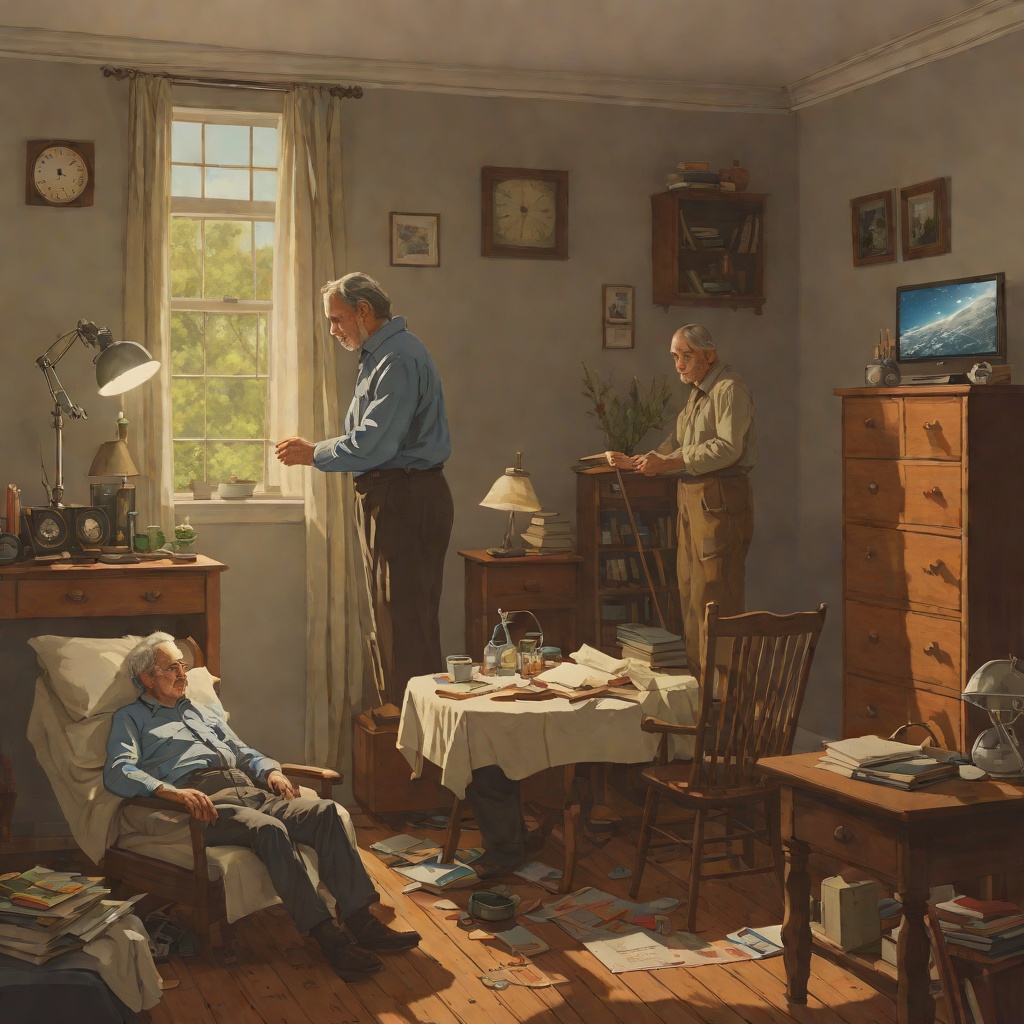
Die, My LoveThe Treatment Talk is the hinge on which the entire marriage of The Narrator and The Husband turns — the quiet, early-morning conversation that ends ten years of shared life not with a slammed door or a shouted accusation but with four ordinary words: "Come here, sit down." It is the scene in which the husband finally names his wife's condition as one requiring medical intervention, and in which she, in response, vomits the whole decade onto the furniture and then, in a grotesque parody of commitment, asks him to marry her. The scene condenses the novel's central tensions — madness, marriage, motherhood, and the failure of language — into a single domestic tableau, and it sets in motion the institutionalization, the affair, and the eventual dissolution that follow.
The Morning of the End
The scene opens at seven-forty in the morning, with the wind beating about the couple's heads — a detail that already suggests exposure, a shelter about to be stripped away. The narrator notes that her husband is "nor... an idiot," that he merely "look[s] like one," and this grudging acknowledgment of his perceptiveness is what makes the moment so devastating: he is not stumbling into cruelty but delivering a considered verdict. When he says "Come here, sit down," she understands immediately that this is the end. The phrase, she reflects, is all one needs to hear to know it is over — a performative utterance in the most literal sense, words that accomplish the ending they describe. She goes weak at the knees. The night before had been "rough, tough, bloody," leaving a bitter taste in her mouth, and now her body registers the blow physically: a stabbing pain in her sex so severe she must drag herself toward the chair.
The Wish to Be an Old Woman
In the interval between the command and the substance of the talk, the narrator's mind runs to a strange fantasy: she wishes she could use a walking stick, dress like an old lady, dye her hair grey, and take pills for neurological illnesses until her brain made room for them. She wants to be an old woman — "unpleasant in every way, repulsive, unbearable" — to stink, to take medication that makes her worse, so that others would have to look after her for even longer. This is not escapism but a form of protest: if she is to be seen as a problem to be managed, she will become the most burdensome problem imaginable. The fantasy is also a premonition, because what her husband is about to propose is precisely a regime of medication and institutional care — a future in which she will indeed be looked after, managed, and medicated, though not as the repulsive old woman she imagines but as a patient.
The Proposal of Treatment
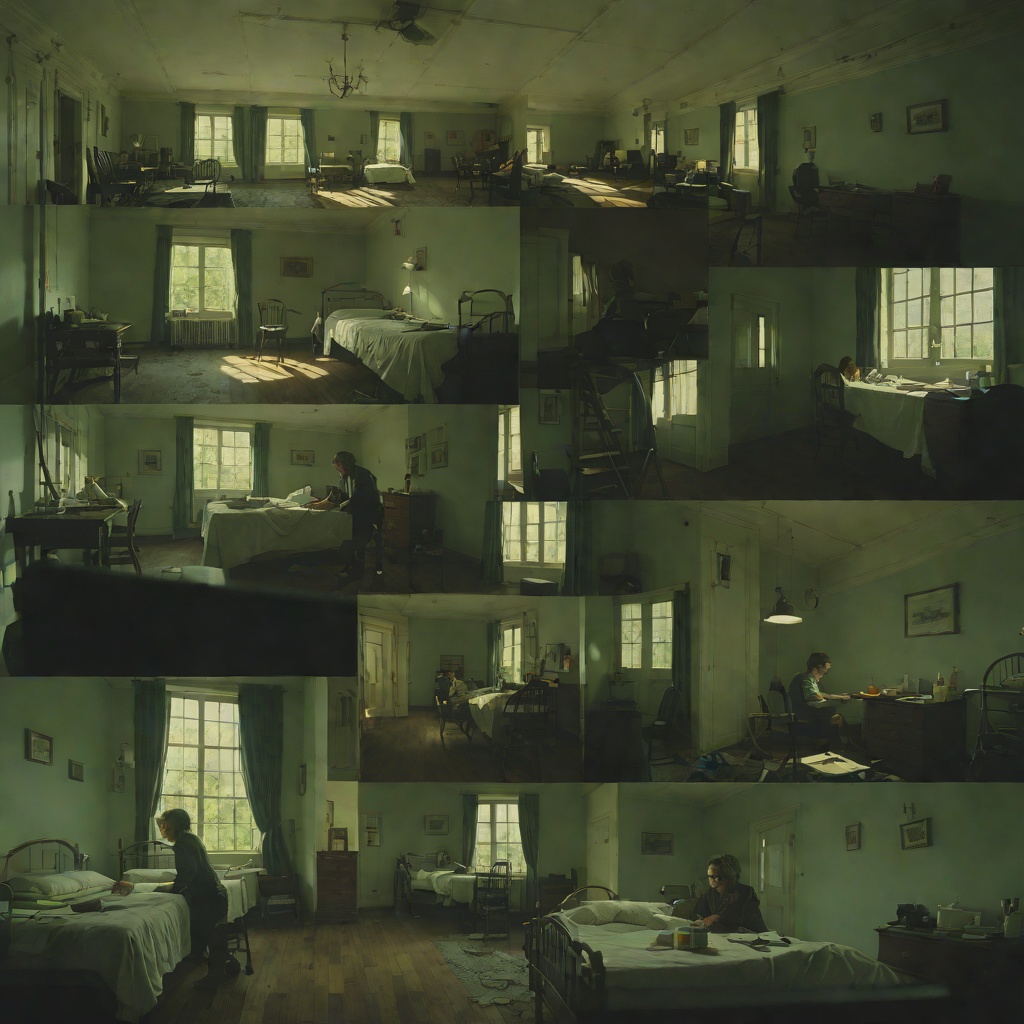
When the husband finally speaks, the narrator watches his mouth move "already very far away," saying words she does not understand — a precise image of the failure of language that runs through the novel. Then she hears the word "treatment." That is how he sees her: as a woman who needs to calm down and become an amoeba, a woman who needs to be in a place full of sheets and white walls, with pills, capsules, and tablets under her tongue. She imagines the institution in vivid, mocking detail: getting to know her roommate, drinking juice with the other "poor sods," attending craft workshops, reading illustrated hardback books, until one day the patients blow up balloons and draw going-away posters with coloured crayons because she has been discharged and allowed to return to society. The fantasy is both a satire of psychiatric care and a genuine dread — the narrator can picture the entire arc of institutionalization, from admission to the crayon-drawn discharge party, and the precision of the vision makes it all the more terrifying.
The Vomiting and the Aftermath
The narrator holds in a need to heave that she describes as a thousand times stronger than a cramp, a contraction worse than an open sore, appendicitis, the evil eye. Then she becomes a toad and, "like a poisonous stream of piss," throws up their ten years as a couple all over the table, the chair, and the sofa. The vomiting is the novel's most visceral image of the body refusing to contain what the mind cannot process — the decade of marriage expelled as waste. The husband, faced with the damage, does not know whether to mop up, hug her, or call an ambulance and finally have her committed. The child — their son — looks at them from between the table legs and "understood it all like an adult," staring at her with "a homemade blade in his mouth," an image that fuses the innocence of a toddler with the threat of violence. Inside, the narrator feels, everything is splinters. She gets up shakily: she has lost her home.
The Proposal of Marriage
She goes out into the fields, where she reflects that she would be less lost if she heard someone on the radio say that war had broken out — a measure of how completely her private catastrophe has eclipsed any public one. Nature laughs at her; the old veteran is no longer the mistress around here. Insects crawl up onto her body. She stays there, looking at the sky, rolling around in the weeds, and when it is over she goes inside. Her "boys" — the husband and the son — are watching a game show on television and eating hamburgers; the smell of fried food is in the air. And then she says, "Let's get married." One minute later, without taking his eyes off the TV, her man says: "Sure." The scene's final irony is total: the same man who, minutes earlier, proposed committing her to a psychiatric institution now agrees, absent-mindedly, to marry her again. The proposal is at once a desperate attempt to undo the morning's damage and a confirmation of its futility — a marriage vow uttered to a man watching a game show, accepted without a glance, the mechanized love of the novel's title made literal.
Significance
The Treatment Talk is the novel's central peripeteia, the reversal from which no subsequent action can recover. It transforms the marriage from a strained but intact arrangement into a terminal condition, and it does so through language — the husband's clinical "treatment" and the narrator's absurd "Let's get married" — rather than through any physical rupture. The scene also establishes the pattern of the narrator's response to crisis: bodily revolt (the vomiting), escape into nature (the fields), and a return to a domestic scene from which she is already estranged. The child's adult comprehension from between the table legs foreshadows the novel's insistence that nothing can be hidden from him, and the husband's televised acceptance of her proposal prefigures the emotional vacancy that will drive her into the affair with The Radiologist. The Treatment Talk is thus not merely an ending but a beginning — the moment the narrator loses her home and, in the same breath, agrees to rebuild it on foundations that have already collapsed.